.png)
What Children See, Hear and Carry With Them

TL;DR
Children living with Domestic Abuse are always aware of what is happening, even when they are not directly involved. They see the tension, hear the conflict and carry the emotional impact long after the moment has passed.
This can affect their confidence, relationships and sense of safety, but with the right support, children can begin to understand that what they experienced was not their fault.
When we talk about Domestic Abuse, the focus is often on the adults involved, but children are part of that environment too and their experiences matter just as much, and they do not need to witness everything to be affected.
In many cases, they are quietly observing, listening and making sense of what is happening around them in ways that can stay with them for a long time.
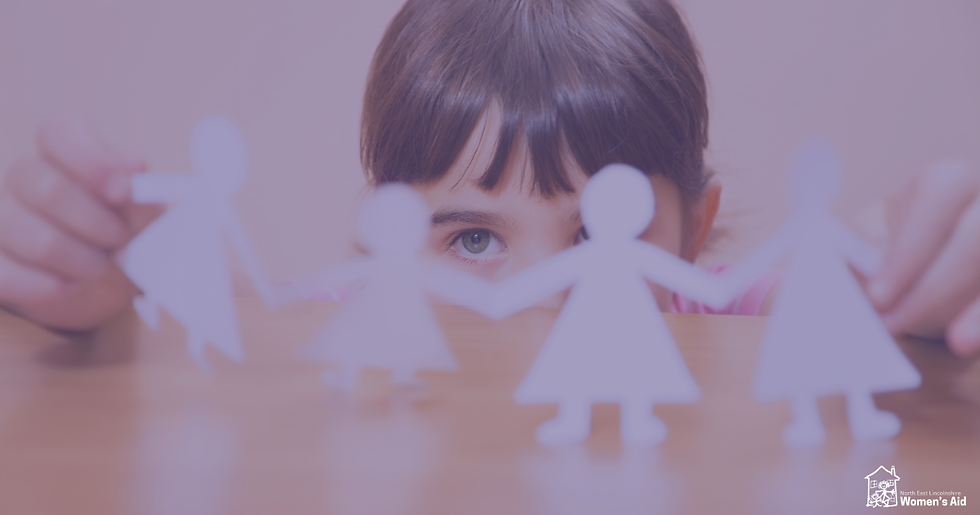
The unseen impact on children
Children experience Domestic Abuse in layers. It is not just what they directly witness but what they absorb over time through behaviour, tone, atmosphere and change.
Below, we explore the different ways children experience and carry these moments.
What children see
Children notice behaviour, patterns and changes in the people around them, even when nothing is explained.
Children are often highly observant. They see the way one parent may become withdrawn, anxious or constantly on edge, and they notice when interactions feel tense or unpredictable.
They may witness arguments, but they also see the quieter moments, such as someone being ignored, dismissed or controlled.
This might include one parent checking the other’s phone, questioning their movements or making decisions without them.
Over time, these behaviours can begin to feel normal, even if they don't feel right.
What children hear
Children hear more than we realise, including words, tone and the silence that follows.
Even when children are not in the same room, they often hear raised voices, sharp exchanges or long silences that feel heavy.
They may hear criticism, blame or language that undermines one parent and they might also hear apologies that are followed by the same patterns repeating. For many children, it is not just the noise but the unpredictability.
Not knowing when something might happen can leave them constantly alert, listening for signs of change.
What children feel
Children carry emotions they cannot always explain, often without the language to express them.
Children living with Domestic Abuse often experience a mix of emotions. They may feel frightened, confused or unsettled, even if they cannot fully understand why.
Some children feel responsible and believe they need to behave in a certain way to prevent conflict, while others may feel angry or become quiet and withdrawn.
It is also common for children to feel loyalty towards both parents, which can create a sense of conflict within themselves.
These emotions can be difficult to process and may stay with them over time.
What children learn
Children develop their understanding of relationships from what they see and experience at home.
The home is where children first learn what relationships look like. If they grow up around control, fear or imbalance, these behaviours can begin to feel expected.
They may learn to avoid conflict completely or, in some cases, repeat the behaviours they have seen because it feels familiar.
This is not a conscious choice, it's a response to what has been modelled to them.
Without support, these patterns can shape how they interact with others as they grow.
What children carry with them
The impact of Domestic Abuse does not always end when the situation changes.
Children may carry anxiety, low self-esteem or a heightened sense of responsibility. They might find it difficult to trust others or to feel safe, even in calm environments.
Some take on caring roles too early, while others struggle to express how they feel. These experiences can influence their confidence, their relationships and their sense of self.
However, it is important to recognise that this is not the end of their story. With the right support, children can begin to understand what they have experienced and rebuild a sense of safety and stability.
In Summary
Children do not need to be directly involved in Domestic Abuse to be affected by it.
They see the changes, hear the conflict and carry the emotional impact in ways that are often hidden.
Understanding this helps us respond with greater awareness and compassion and reminds us that children are not just witnesses, they are part of the experience and their voices and feelings matter.
Final thought
If you are worried about a child, or if any of this feels familiar to your own situation, you are not alone.
Support is available, and reaching out can be the first step towards understanding what is happening and finding a way forward.
At Women’s Aid North East Lincolnshire, we are here to listen without judgement and to support, not only adults but children too, in a safe and understanding way.
If you feel you need support or just a chat to work a few things out, we are here to help and support you
📱Telephone 01472 575757 (Option 1)
📩 Email support@womensaidnel.org
💻 Drop us a message on social media
🌐 Visit Our Website www.womensaidnel.org


Comments